Books

Three books. Two distinct bodies of work.

Built to Be Examined is a practical guide to building decisions, records and systems that withstand scrutiny. The Enterprise and Below the Threshold are companion books exploring financial crime from opposite sides: the organisations that profit from it and the people left carrying its consequences.

A standalone professional guide

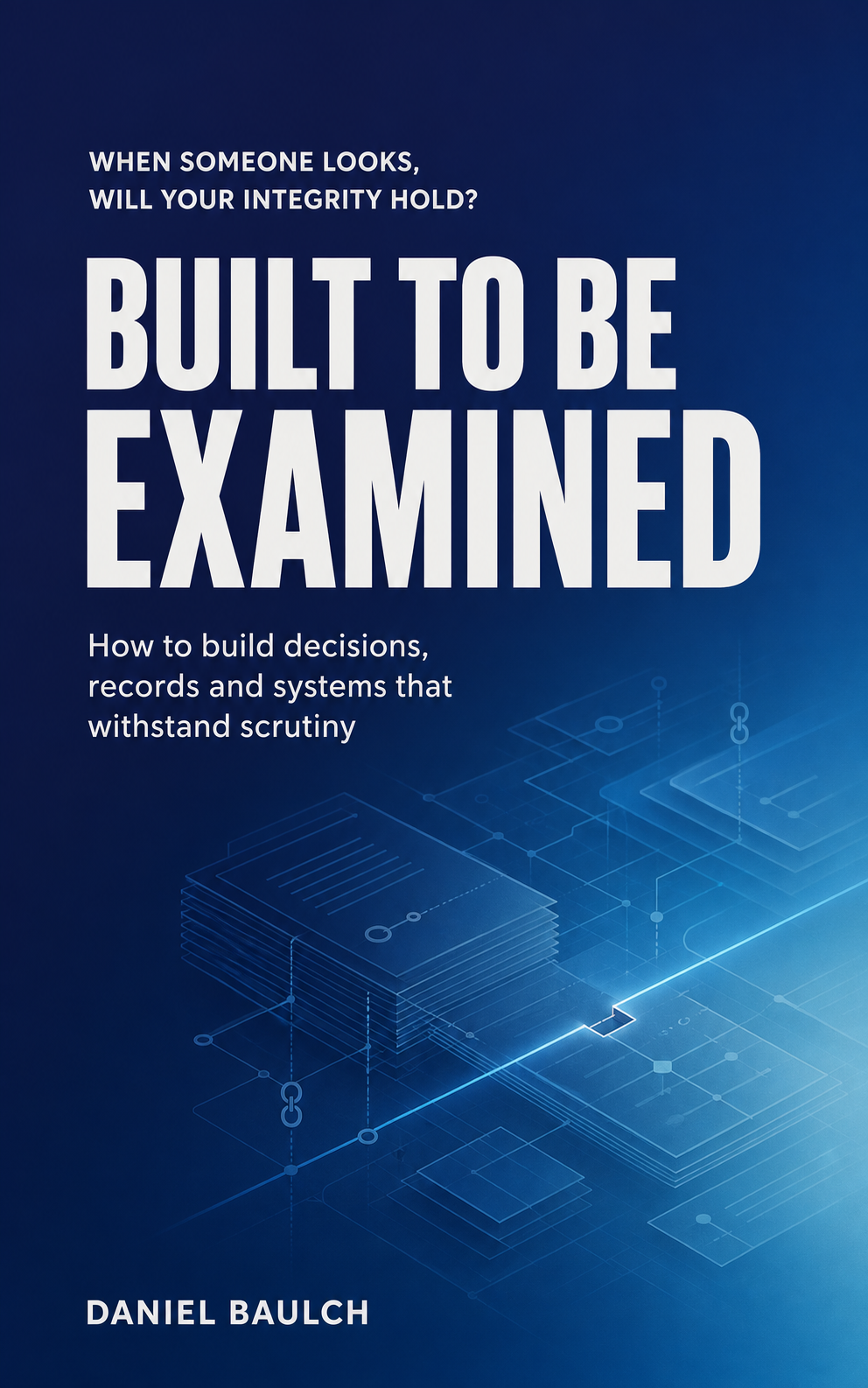
Built to Be Examined — book cover
Available now

Built to Be Examined

How to build decisions, records and systems that withstand scrutiny

Business · Governance · Investigations · 16 chapters

A supplier nobody else deals with. A colleague who never takes leave. A set of invoices that don't look right. Somebody notices, and in the twenty seconds it takes them to say it, you realise there is nobody impartial to hand it to. Built to Be Examined is about what you build before that day. Drawing on twenty-five years in policing, professional standards, regulation and anti-corruption, it sets out — in plain language and without a fear pitch — what separates the organisations that come through a serious matter from the ones that don't. Every chapter carries a case: Clive Peeters, Wells Fargo, the Post Office Horizon scandal, Centro, and matters from the author's own work.

For directors, owners, executives, and the investigators, compliance and integrity practitioners who work beside them.

Companion books on financial crime

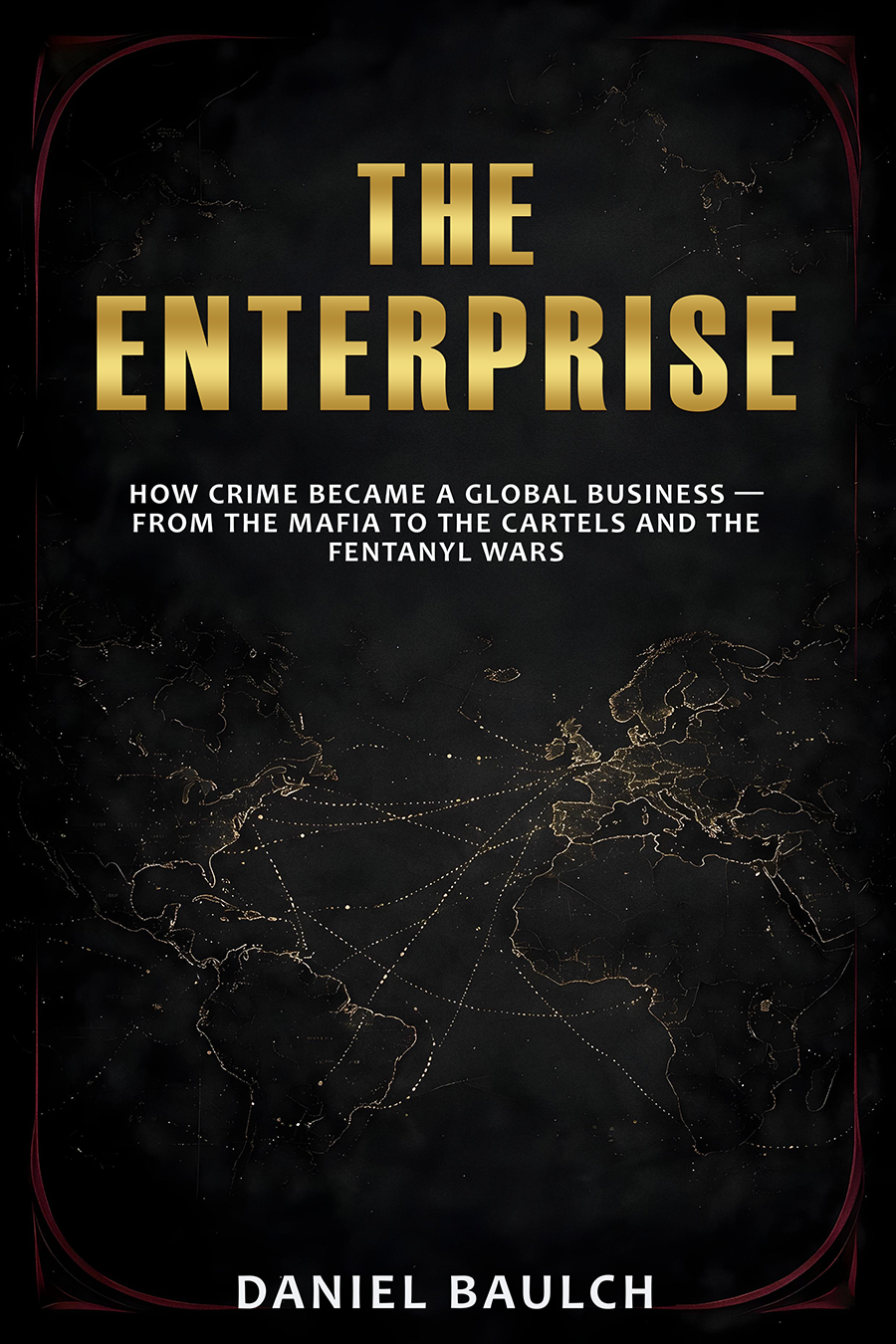
The Enterprise — book cover
Out now

The Enterprise

How Crime Became a Global Business — From the Mafia to the Cartels and the Fentanyl Wars

Narrative non-fiction · True crime · 15 chapters in four parts

A century-spanning history of how organised crime became a global business. It traces the arc from the Sicilian and American Mafia — and the RICO statute built to break it — through the Cold War's secret drug wars in the Golden Triangle, the Golden Crescent and the Contra era, to the rise of the Mexican cartels out of the Guadalajara split, and finally to the methamphetamine, pill-mill and fentanyl economies of today. Its argument: these enterprises endure because they behave less like gangs than like corporations — adapting, diversifying, and exploiting the same institutional weaknesses that defeat one enforcement strategy after another.

For readers of McMafia, Narconomics and Killing Pablo.

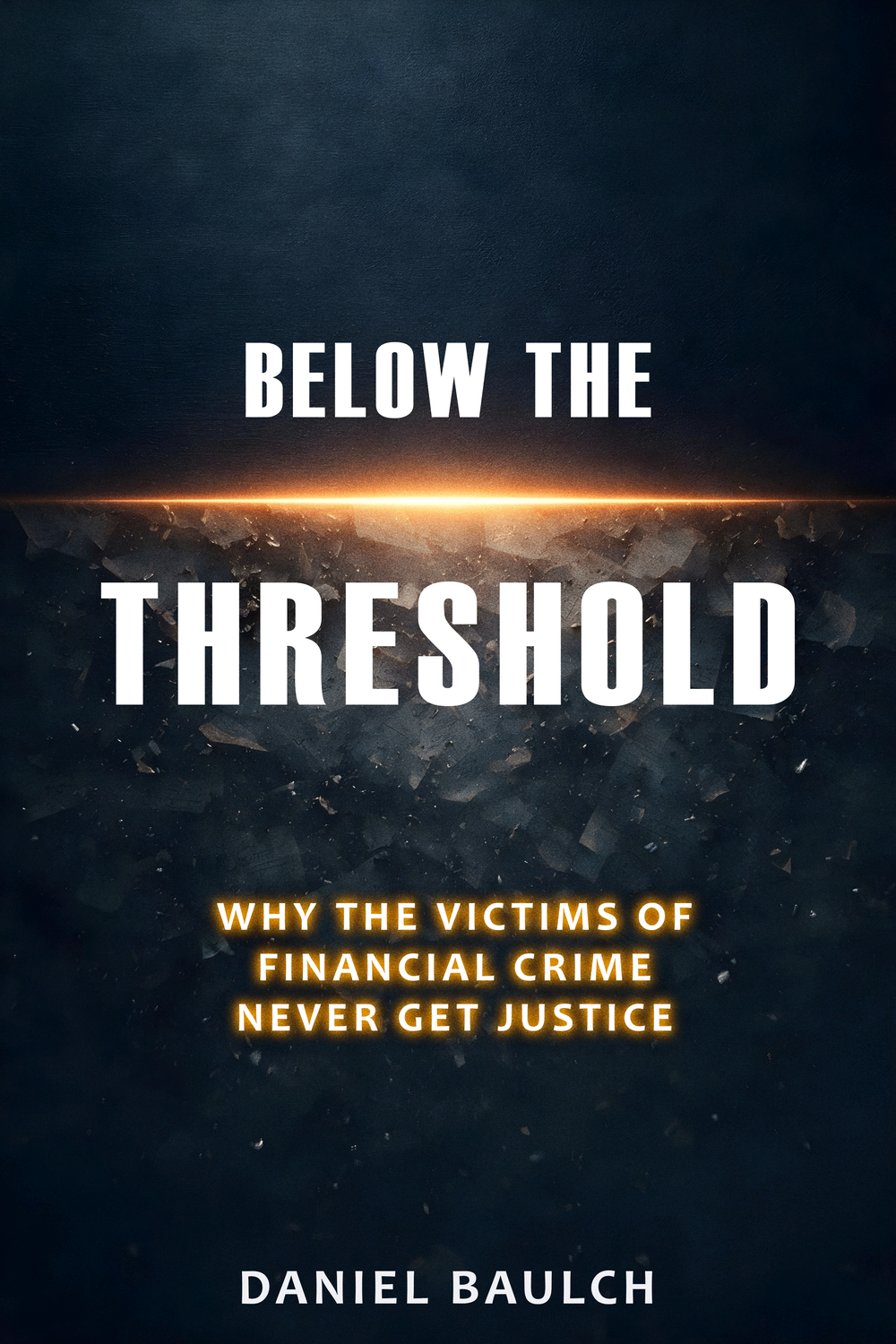
Below the Threshold — book cover
Coming soon

Below the Threshold

Why the Victims of Financial Crime Never Get Justice

Narrative non-fiction · True crime · 11 chapters in two parts

Financial crime has industrialised faster than the justice system's capacity to respond — and it is ordinary people with modest, uninsured losses who fall through the widening gap. The book moves from the boardroom to the kitchen table: the corporate frauds of Enron and Wirecard, the institutional failures of Wells Fargo and Danske Bank, occupational theft, ransomware and everyday scams — and then the people whose cases are quietly closed because their loss falls below the threshold for investigation. It exposes how institutions have learned to manage the damage without reporting the crime, why the victims least able to absorb a loss are the ones left carrying it, and what real reform could look like.

For readers of Bad Blood, Billion Dollar Whale and Empire of Pain.

Publishing September 2026 — purchase links coming shortly.

Notify me on launch

Below the Threshold is coming soon. Leave your details and we'll let you know the moment it's released.

We'll only email you about the launch of Below the Threshold. No other marketing, and you can unsubscribe at any time.

About the author

Daniel Baulch has spent more than twenty-five years investigating organised crime, corruption and financial crime — and living with the pressure that comes with it. As a detective on Victoria Police's Purana Taskforce during the Melbourne gangland wars and the period connected to the Lawyer X matters, he saw firsthand how organised crime exploits institutional weakness. He went on to run covert corruption investigations that sent serving police officers to prison, and led Victoria Police's Professional Standards Command and Crime Intelligence functions before taking investigations leadership roles at WorkSafe Victoria and the Victorian Electoral Commission.

That work carried a cost. Across his career he has survived threats to his life, false accusations and repeated attempts to discredit him — and each time chose to continue the mission of fighting crime and corruption rather than step away from it.

From 2023 to 2026 he served as the inaugural Deputy Commissioner (Operations & Technical Services) of Papua New Guinea's Independent Commission Against Corruption. In that role he engaged international stakeholders including the United Nations, the OECD, the IMF, the Asian Development Bank and the FATF on transnational organised crime, money laundering and asset recovery, and has presented on the global stage to agencies such as the UN Office on Drugs and Crime and the World Bank on corruption.

Baulch is as much a student of his field as a practitioner of it — a close reader of the history of policing, investigation and organised crime, and of how the law both succeeds and fails against them. He is particularly interested in how poorly designed laws and policy can produce unintended and damaging consequences, even as he argues for laws and institutions capable of confronting crime at its core. In January 2026 he founded Integrity Solve, an advisory practice focused on integrity, investigations, financial crime and AML/CTF. He writes, speaks and comments on corruption, organised crime, financial crime and institutional integrity across Australia and the Pacific.